Malaysia Women after 7 Rounds in the 46th Chess Olympiad at Samarkand
By GilaChess - September 24, 2026
Malaysia's women are having a solid run at the 46th Chess Olympiad in Samarkand. After seven rounds, they sit 59th out of 189 teams, a nice jump from their starting seed of 68th. They've won four matches and lost three, for 8 match points and 18.5 game points overall.
The standout so far is WFM Ainul Mardhiah Mohd Afif on Board 4. She's scored 4 out of 5 with a performance rating of 2153, easily the best result on the team.
She's had good backing, too. WCM Chua Jia-Tien has picked up 3 points from 5 games, and Ashwiniy Kumaran has been superb off the bench with 3 out of 4. WFM Tan Li Ting and WFM Chong Kai Ni Agnes have held things together on the top boards.
Within Southeast Asia, Malaysia is holding its own. With 18.5 game points, the team is ahead of Singapore (16.5) and keeping close to the regional front-runners.
The latest round saw Malaysia whitewashing Nicaragua 4-0.
There are still 4 rounds to play, but it's been a strong start for the team.

I am a big supporter of open source and I've always favoured LiChess of Chess.com
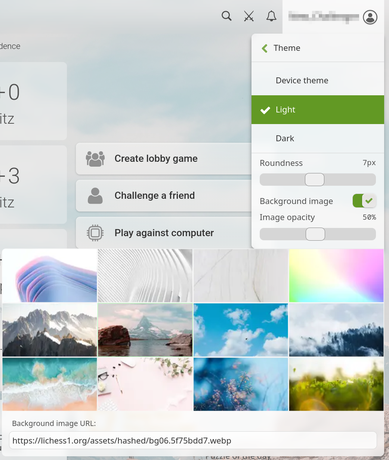
Here are the latest changes andd improvements to LiChess.



Crossing the halfway mark, the dust settles on Round 6, the 11-round Swiss-system "pressure cooker" has begun its ruthless sorting of the 2026 field. Also, apt is the rest day today which must be needed by all the 205 countries taking part.
Malaysia’s campaign is consistent as in past Olympiads, we go up, then we go down. That is why, I am only looking at starting rank vs the final round rank to see our performance.Entering as the 67th seed (SNo 67), the Malaysian squad found themselves languishing at Rank 82 after a bruising fifth round. However, the team successfully clawed back from that slump with a decisive surge in Round 6, catapulting up the standings to Rank 59. Now if we can only stop the ping pong effect and keep our improved rank and/or improve on it!
Malaysia have now surpassed their initial seeding by 8 places. While their match record of 4 wins and 2 losses (8 match points) keeps them in the thick of the mid-table battle, an expert eye looks to their 14.5 game points (Tie Break 3). This figure suggests a team that is fighting for every half-point on the lower boards, a necessity for maintaining upward mobility as the pairings become increasingly difficult.
The most electrifying story of the tournament’s first half involves the Philippines and Vietnam, both of whom have effectively broken into the "Elite" tier. By the end of Round 6, these teams have positioned themselves in contention for prestigious Category Awards, which are often the true measure of success for rising chess nations.
Both nations boast identical match records that underscore their consistency:
Indonesia (Seed #52) has provided the most dramatic arc of the regional cohort. After Round 5, Indonesia occupied the dizzying heights of Rank 13, flirting with the tournament's absolute elite. However, Round 6 saw a correction, with the team shifting to Rank 34.
From an analytical perspective, this tumble is less a collapse and more a symptom of the Swiss-system’s ruthlessness. Having reached the top 15, Indonesia was inevitably paired against a top-10 powerhouse; their subsequent drop is the standard "tax" paid for facing elite opposition. Despite this, they remain 18 spots above their initial seeding with a healthy 16.5 game points, keeping them well within striking distance of a top-20 finish.
Singapore (Seed #50) is the picture of consistency , recovering from a Round 5 dip (Rank 56) to secure Rank 43. Beyond the primary seeds, the regional depth is further evidenced by:
The lone outlier in this regional success story is Thailand (Seed #104), which has struggled to find its rhythm. Sliding to Rank 125 (-21 Net), the Thai squad stands in sharp contrast to the otherwise "green" status of its neighbors.
The following data reflects the standings of the eight specified regional teams at the conclusion of the sixth round:
Team | Starting Seed (SNo) | Rank after Round 5 | Rank after Round 6 | Net Seed Change (SNo vs R6) |
Philippines | 57 | 49 | 29 | +28 |
Vietnam | 47 | 46 | 31 | +16 |
Indonesia | 52 | 13 | 34 | +18 |
Singapore | 50 | 56 | 43 | +7 |
Malaysia | 67 | 82 | 59 | +8 |
Chinese Taipei | 83 | 65 | 70 | +13 |
Hong Kong | 108 | 76 | 88 | +20 |
Thailand | 104 | 97 | 125 | -21 |
The "honeymoon phase" of the tournament is over. The final five rounds in Samarkand will test the psychological depth of these teams as the pairings tighten and every game carries the weight of history. Philippines and Vietnam are hoping to consolidate their top-30 positions.\
Malaysia hope is to continue its upward trajectory.

The purpose of this blog post is to compare Malaysia's performance for the Open team compared to our neighbours like Singapore, Indonesia, Phillippines, Vietnam, Thailand and Hong Kong. It's purely trivia and of interest to me only but I wanted to share this on the blog on the off chance anyone else may be interested. This is only after 3 rounds and I will post the stats again after a couple of rounds more..
The Olympiad runs 11 rounds. Rounds 1-3 are the "opening phase," where seeding gaps are widest. Singapore and Vietnam went in as the region's top dogs (seeds #50 and #47), with Malaysia (#67) in the middle of the pack, and Thailand/Hong Kong starting from the back.
The takeaway: Malaysia took a real hit but recovered well. If they'd lost again in Round 3, they'd have slid toward the bottom half of the field — instead they're holding steady in the middle.
Singapore is having a breakout tournament — perfect 6/6 match points:
That Norway win is a genuine giant-killing result for a #50 seed, and it's likely to earn them a Round 4 clash against elite competition (India, USA, or hosts Uzbekistan).
| Team | Result | Notes |
|---|---|---|
| Singapore | Beat Norway 2.5-1.5 | Huge upset, still undefeated |
| Philippines | Beat Tunisia 4-0 | Clean sweep, back in the mix |
| Indonesia | Beat Uganda 3.5-0.5 | Recovered from a narrow loss to India |
| Chinese Taipei | Beat Mauritania 4-0 | Second win in a row |
| Vietnam | Lost to Greece 1-3 | Stumble for the other regional favorite |
| Malaysia | Beat Honduras 3.5-0.5 | Recovery after Croatia sweep |
| Thailand | Drew Portugal 2-2 | Gritty result vs. a much higher seed |
| Hong Kong | Lost to Chile 0.5-3.5 | Still searching for form |
| Team | MP | Board Pts |
|---|---|---|
| Singapore | 6 | 9.5 |
| Philippines | 4 | 9.0 |
| Indonesia | 4 | 9.0 |
| Chinese Taipei | 4 | 9.0 |
| Vietnam | 4 | 8.5 |
| Malaysia | 4 | 7.5 |
| Thailand | 3 | 6.0 |
| Hong Kong | 2 | 5.0 |
Singapore's hot streak means much tougher pairings ahead as the Swiss system starts matching them against world powers. Malaysia, having steadied the ship, should also expect stiffer opposition in Round 4 — but their recovery from the Croatia loss is a good psychological sign heading into the tougher middle rounds.

Another year, another edition of the Blue Chevaliers Open in the books — and honestly, this one might be the best yet. Phuket has quietly become one of the go-to spots on the Southeast Asian chess calendar, and the clash with the 1st Berjaya event did nothing to hurt that reputation. For local Thai and even Malaysian players especially, this tournament is gold: a full nine-round Swiss against a genuinely international field, played at home, with real chances to pick up rating points and norms. You don't get that kind of opportunity.
Here's the rundown on the logistics:

And what a week it turned out to be. The title race went right down to the last round.

If you've ever played top board in a big Swiss, you know how thankless it can feel. Everyone below you is playing with house money — a draw against the top seed is a great result for them, so they take risks, dig in, and generally make your life miserable. GM Dmitriy Khegay (FID, 2504) had to deal with exactly that pressure for nine rounds, and he handled it about as well as you could ask.
The story really came down to the last round. Khegay walked in needing a win, with the white pieces against GM Harmen Jonkman — no easy out, no draw-and-coast option. He got the job done, closing out the tournament on 7.5/9 and settling the title in the last game of the day.
It's the kind of finish that says more about a player than any single brilliancy could. With the field averaging around 1882, there was no room to relax against "lower-rated" opposition — plenty of those players were more than capable of causing an upset. Khegay's composure under that pressure is really what won him the tournament.

If the champion's story was about steadiness, second place was all about a breakout. It's rare to see a FIDE Master push past a pack of Grandmasters and International Masters to lock down clear second — but that's exactly what happened here.
FM Varun Gampa Aditya (IND, 2307) was the player everyone was talking about by the closing rounds. He capped off a gritty tournament with a Round 9 win over A Qil A Lauddin Abd Aziz, finishing on 7.0/9. That's a serious result — the kind that puts an IM norm conversation firmly on the table.
Below him, things got crowded fast. Five players tied on 6.5/9, and it took tiebreaks to sort out the order:

| Name | Title | Federation |
|---|---|---|
| Nubairshah Shaikh Mohammad | IM | India (IND) |
| M.R. Venkatesh | GM | India (IND) |
| Van Huy Nguyen | GM | Vietnam (VIE) |
| Nikolai Val. Makarov | FM | FIDE (FID) |
| Tran Pham Quang Minh | — | Vietnam (VIE) |
My favorite name in that group is Tran Pham Quang Minh — no title next to his name, but don't let that fool you. At only 12 years of age, he drew GM Harmen Jonkman in Round 7 and beat the higher-rated FM Ankit Gajwa back in Round 6. Vietnam has been quietly producing a lot of young, dangerous untitled players lately, and Minh's run here is a good example
.
Open tournaments like this are always a good gauge of where the next generation stands, and this one had a couple of nice junior performances worth flagging.
 |
| courtesy of https://www.facebook.com/causofamily0816 |
Neelabhro Bandyopadhyay came away with solid 6.0/9 finishes. Bandyopadhyay in particular looked comfortable on the upper boards — the kind of composure that usually takes years longer to develop.
And a special shoutout to 10-year-old Jade Causo. Her score, 3.0/9, doesn't tell the full story. She was in the field with adults twice or three times her age and titled players well above her level, and by all accounts she never looked out of place or intimidated. Tournaments like this are exactly where that kind of experience gets built, and she should be proud of the week.
Statistically, this was a tournament defined less by GM density and more by depth. The average rating of 1882 meant the top seeds couldn't coast against anyone — there were too many underrated, hungry players ready to punish complacency.
31 federations were represented this year:
| Rank | Name | Federation | Rating | Points |
|---|---|---|---|---|
| 1 | Dmitriy Khegay | FID | 2504 | 7.5 |
| 2 | Varun Gampa Aditya | IND | 2307 | 7.0 |
| 3 | Nubairshah Shaikh Mohammad | IND | 2387 | 6.5 |
| 4 | M.R. Venkatesh | IND | 2335 | 6.5 |
| 5 | Van Huy Nguyen | VIE | 2348 | 6.5 |
| 6 | Nikolai Val. Makarov | FID | 2140 | 6.5 |
| 7 | Tran Pham Quang Minh | VIE | 2051 | 6.5 |
| 8 | Neelabhro Bandyopadhyay | IND | 2165 | 6.0 |
| 9 | Arsens Batashevs | LAT | 2201 | 6.0 |
| 10 | David C. Smerdon | AUS | 2461 | 6.0 |
If there's one takeaway from the numbers, it's this: nobody at the top got to coast. The favorites had to play close to flawless chess just to stay ahead of the FMs and untitled players snapping at their heels — which, honestly, is exactly what makes these Open events fun to follow.
Another edition down, and the Blue Chevaliers Open keeps proving it belongs on the regional calendar. Khegay's title run showed what disciplined, high-level preparation looks like under pressure, but for me the real headline was the chasing pack — Varun Gampa Aditya's breakout run and Tran Pham Quang Minh's giant-killing streak were the kind of stories that make Open tournaments worth watching in the first place. Here's hoping the next edition brings even more of that chaos.
Links:
Organisers Facebook page: https://www.facebook.com/bluechevaliersopen
Chess-results: https://s2.chess-results.com/tnr1365480.aspx?lan=1&art=4&fed=SGP&turdet=YES&flag=30&SNode=S0


Like a caveman I arrived at Cititel last month for the #MYchessFestival meeting confused about where the hotel parking space has gone. As ...